 Handpicked
Best Under-Sink Water Filters for 2026
RO and Filter Systems
6 models compared · $38–$1,039
Handpicked Reviews
Editorial picks, compared and dated.
 By Mira FengMira Feng · Water Filtration EditorPublished in September 2026
Bottled water is the expensive way to solve a taste problem. An under-sink system fixes it once, and the running cost is the filter - which is what you should compare, not the box price. We compared six Waterdrop systems, from a basic inline filter up to a tankless reverse-osmosis unit, on what they remove, how much they waste, and what a year of filters actually costs.
This site is reader-supported. We may earn a commission when you buy through links on this page.
At A Glance: Our Top Picks


Top 6 Under-Sink Water Filters
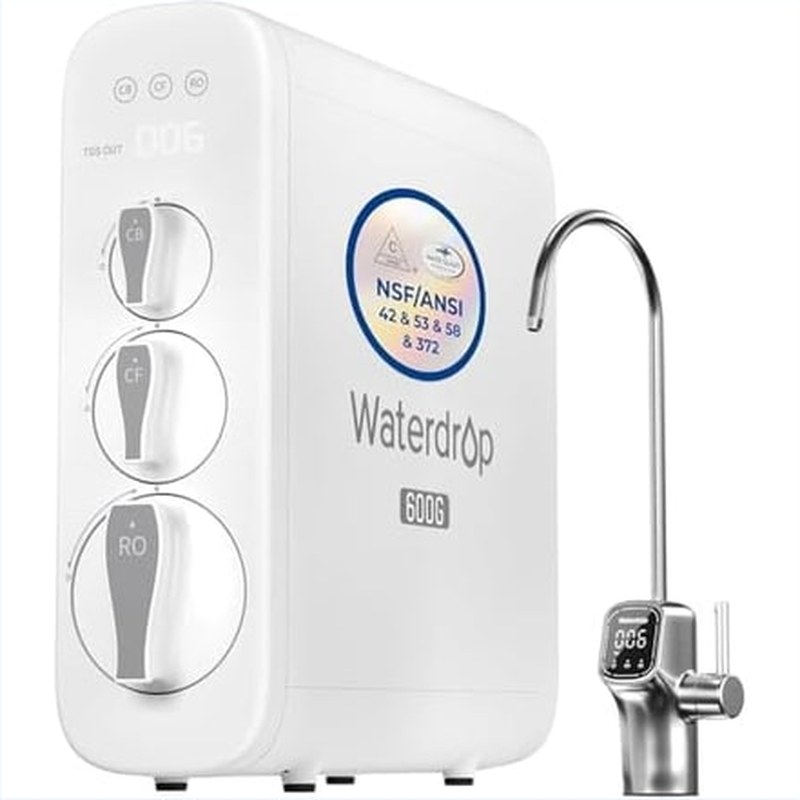
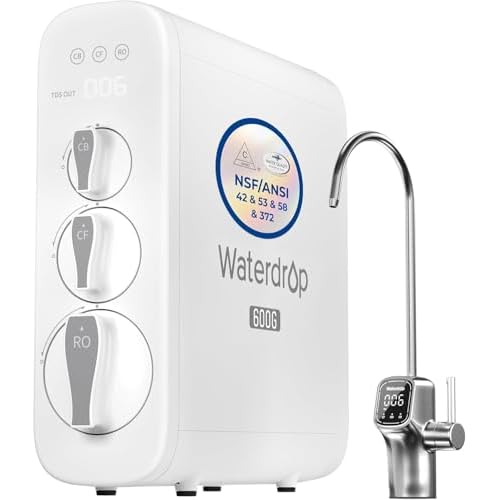
Waterdrop G3P600 Tankless Reverse Osmosis Water Filter System, 600 GPD
- Tankless reverse osmosis
- 600 GPD flow
- Under-sink design
Waterdrop G2P600 Under-Sink RO System, 600 GPD Tankless RO Water Filtration
- Under-sink RO system
- 600 GPD
- Compact footprint
Waterdrop 10UA Under Sink Water Filter System, NSF/ANSI 42 Certified 1 Year
- Direct-connect under-sink filter
- Simple install
- Low entry price

Waterdrop 15UA Under Sink Water Filter System, 19000 Gallons, 2 Years
- Higher capacity inline filter
- Longer cartridge life
- Easy retrofit

Waterdrop G3P800 Tankless Reverse Osmosis Water Filter System, 800 GPD
- 800 GPD tankless RO
- Higher output
- Under-sink

Waterdrop X12 Alkaline Mineral Reverse Osmosis System, 1200 GPD, Under-Sink
- Alkaline mineral RO
- Highest capacity here
- Tankless
Buyer's Guide
Filter or reverse osmosis?
A carbon filter improves taste and removes chlorine and some contaminants. Reverse osmosis removes dissolved solids too, including the things a carbon filter cannot - at the cost of waste water and a slower flow.
Tankless versus tank
Tankless RO saves the space under the sink and avoids the tank going stale, but you pay more upfront. Tank systems are cheaper and slower.
The number that matters: waste ratio
Older RO systems waste three or four litres for every litre produced. Modern tankless units are far better - check the ratio, not just the claim of 'efficient'.
Filter cost per year
A cheap system with expensive cartridges is not cheap. Multiply the cartridge price by how many you replace per year before deciding.
Installation reality
Most inline filters are a ten-minute DIY job. RO units need a drain connection and a hole in the counter for the tap, which is a bigger commitment.
FAQ
Carbon for taste and chlorine; reverse osmosis if you want dissolved solids and heavy metals reduced as well.
For an inline filter, usually not. For a tankless RO with a dedicated tap, most people prefer a plumber.
Typically six to twelve months for carbon stages, one to three years for an RO membrane.
It removes most dissolved minerals. Some units add a remineralisation stage if that matters to you.
Some are. If you buy through them we may earn a commission, and it never changes a ranking.