 Handpicked
Can a Robot Pool Cleaner Stay in the Pool?
It can stay in the water, but not on the charger forever. Battery chemistry and filter loading decide the routine.
9 min read
Handpicked Reviews
Written and dated by our editors.
 By Dana WhitfieldDana Whitfield · Pool & Spa EditorPublished in September 2026
Quick answerquickAnswer: Yes — cordless robots are built to sit submerged, and normal pool water doesn't damage the seals. The battery is the real constraint: leaving a lithium pack fully charged in warm water shortens its life, so most makers specify pulling the robot and charging it after each cycle. Rinse the filter every few cycles.
On this page
- Can a robot pool cleaner stay in the pool all season?
- Does a submerged robot change your pool chemistry?
- How often do you pull it out and recharge?
- Is wall and waterline cleaning included?
- What does a full season actually cost?
- Why the old answer doesn't apply anymore
- Bottom line
Can a robot pool cleaner stay in the pool all season?
It's the second week of July, the water is holding in the mid-80s, and the robot has been on the deep end floor since the middle of May. Nobody has touched it. That's the situation this question is actually about — not a one-night test, but three months of continuous submersion.
The hardware side of the answer is yes. Cordless robots are designed to be left submerged, and the water does not damage the seals in normal use. The housing, the motor compartment, the brush deck — they are built for a life lived underwater. If all you're asking is "will the water ruin it," the answer is no.
The battery side is where the answer turns. Leaving a lithium pack at full charge in warm water shortens its life, and that's why most makers specify removing the robot and charging it after each cycle rather than parking it back in the pool at 100%. Warm water plus a full state of charge is the combination that ages a cell, and a pool in July is warm water on a schedule you don't control.
So the honest split is this: the machine can stay in. The battery shouldn't stay in at full charge. If you want something that genuinely lives in the water and runs on a schedule indefinitely, that's the corded category — power comes from the pool circuit, so there's no pack to degrade. The trade is a cable in the water, which is its own tangle risk and its own kind of seasonal annoyance.
Week one: you leave it in and it's fine. Month one: the charging ritual is the thing you notice, not the cleaning. Post-season: the battery is the part you'll be replacing first, and that's a direct consequence of how you treated it in July.
Does a submerged robot change your pool chemistry?
Not directly, and this is where a lot of pool owners get the wrong idea. A robot is a debris remover. It doesn't sanitize, it doesn't buffer pH, and it doesn't hold chlorine. Put it in the water and your free chlorine reading doesn't move because of the robot.
What does move is chlorine demand. Organic debris sitting in the pool consumes sanitizer as it breaks down. Pulling that debris out sooner — leaves, grass, the stuff that blows in after a storm — means less material working against your chlorine. That's the chemistry benefit, and it's an indirect one.
Two practical notes from the maintenance side:
A loaded filter basket cuts suction and makes the robot work longer per clean. That's not a chemistry problem, it's a runtime problem, and it shows up as shorter effective cycles. Filters need rinsing every few cycles, not once a month.
Manual pre-treatment still applies. At spring opening, when there's a mat of leaves and silt on the floor, a robot sent down into that is just going to choke its basket in the first ten minutes. Net the bulk out first, then let the robot handle the fines. No cleaner replaces that step.
How often do you pull it out and recharge?
After each cycle, if you're following what most makers specify. That's the design intent: run it, lift it, rinse the basket, charge it, put it back when you're ready for the next run. Leaving it docked underwater at full charge is the habit that costs you battery life, and battery life is the single most expensive consumable in a cordless robot's ownership.
Corded units invert the routine. They can run on a schedule indefinitely because the power comes from the pool circuit, so there's no pack to pull and no state-of-charge question. The cost of that convenience is the cable, which tangles, which you'll be untangling, and which is the reason a lot of people choose cordless in the first place.
The middle path most owners land on: leave it in during swim season, pull and charge it on the days you're not swimming, and don't let it sit at full charge for weeks in August water.
Is wall and waterline cleaning included?
No — and this is the detail that separates two robots that otherwise look similar on a shelf.
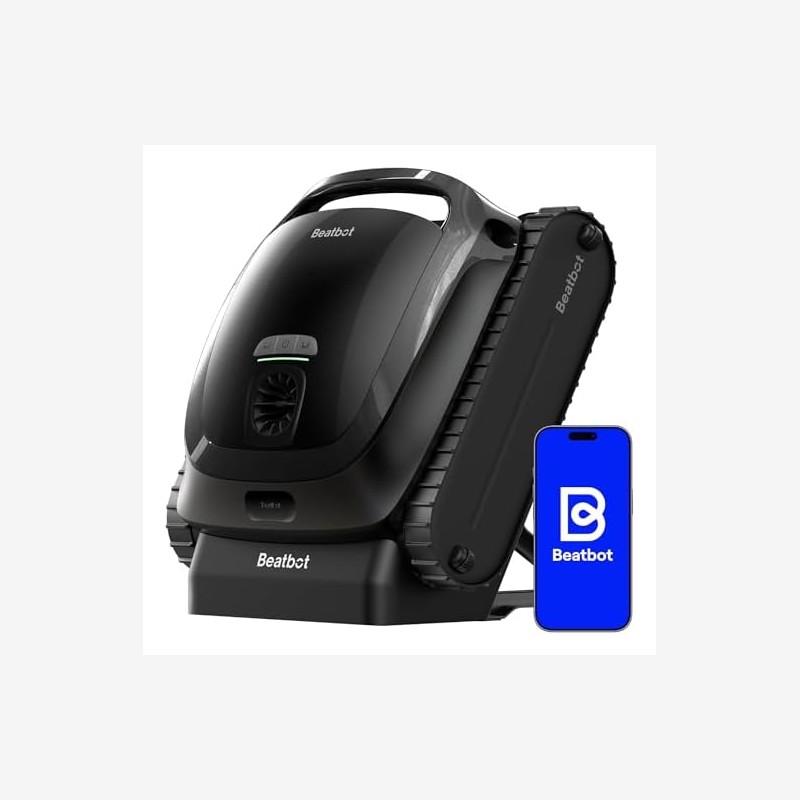
Wall and waterline cleaning is a separate capability from floor cleaning, and not every robot climbs. Of the three models in our current index, only one listing states it outright: the Beatbot Sora 30 Pool Vacuum, whose name reads Floor & Wall & Waterline & Platfo, with an HPR of 9.2 across 263 reviews at $699 at the time of writing. The Beatbot Sora 10 Cordless Pool Vacuum Robot for Inground & Abov doesn't carry wall or waterline in its listing, and it sits lower in our index at HPR 9.0 across 167 reviews at $449.
The Beatbot AquaSense 2 Cordless Robotic Pool Vacuum Cleaner sits at the top of the three with HPR 9.4 across 397 reviews at $799.
Do not treat waterline cleaning as a throw-in. If your pool develops a scum line, the waterline function is the reason to pay up, and if it doesn't, you're paying for a capability you won't exercise. Check the listing language for the specific model rather than assuming the family shares the feature.
What does a full season actually cost?
The sticker price is the easy number. Here it is, as of writing:
| Model | HPR | Reviews | Price | |---|---|---|---| | Beatbot AquaSense 2 Cordless Robotic Pool Vacuum Cleaner | 9.4 | 397 | $799 | | Beatbot Sora 30 Pool Vacuum (Floor, Wall, Waterline, Platform) | 9.2 | 263 | $699 | | Beatbot Sora 10 Cordless Pool Vacuum Robot (Inground & Above) | 9.0 | 167 | $449 |
The season cost sits underneath that. Battery replacement is the line item that arrives first, and how you charge through July and August decides how soon it arrives. Filter rinsing is the recurring labor cost — every few cycles, all season, and a neglected basket means longer runtimes per clean. Neither of those shows up in the purchase price.
Review depth is worth reading as a maturity signal. 397 reviews on the AquaSense 2 is a lot of other people's seasons; 167 on the Sora 10 is a thinner record, even though the price is lower.
Why the old answer doesn't apply anymore
The standard advice — never leave a pool robot in the water — was written for an earlier generation of machines. Those had corded power supplies and seal designs that made long submersion a genuine risk, and the guidance was correct for them.
Cordless units changed the failure mode. Sealed cordless robots are designed to be left submerged and the water doesn't damage the seals in normal use, which removes the old objection. What replaced it is a battery-chemistry constraint and a filter-maintenance routine. The question changed from "will the water destroy it" to "what is three months at full charge in warm water doing to the pack."
That's why you'll still find the old blanket warning in forum threads. It isn't wrong about the machines it was written for. It's just answering a question that cordless designs already solved.
Bottom line
Yes, a cordless robot can stay in the pool — the seals are built for it and the water won't hurt them. What you can't do is leave it sitting at full charge in 85-degree water for weeks and expect the battery to shrug it off; that's the constraint most makers write into their charging instructions. Add a filter rinse every few cycles, and net out heavy spring debris before the robot goes in, because a loaded basket cuts suction and turns a short clean into a long one. If your goal is a machine that genuinely lives in the water on a schedule, that's corded territory, cable and all.
Next step: pull your model's charging instructions and check whether the listing names wall and waterline coverage before you assume it's included — on our current index, only the Sora 30 does.
FAQ
faqJson:
```json { "faqJson": [ { "question": "Can I leave a cordless robot pool cleaner in the pool overnight?", "answer": "Yes. Cordless robots are designed to be left submerged and normal pool water does not damage the seals. Overnight submersion is well inside the design intent. The damage comes from weeks at a full charge in warm water, not from a single night in the pool." }, { "question": "Will a robot pool cleaner throw off my water balance?", "answer": "No. The robot is a debris remover, not a sanitizer, so it doesn't add or consume chlorine or shift pH on its own. Removing leaves and organic debris sooner does lower chlorine demand, because that material would otherwise break down in the water and consume sanitizer." }, { "question": "Do I have to rinse the filter after every single run?", "answer": "Every few cycles is the working rule. A loaded basket cuts suction and makes the robot work longer per clean, so a neglected filter shows up as longer, less effective runs rather than an obvious failure." }, { "question": "Do all cordless pool robots clean walls and the waterline?", "answer": "No. Wall and waterline cleaning is a separate capability from floor cleaning and not every robot climbs. In our current index, only the Beatbot Sora 30 Pool Vacuum lists floor, wall, waterline and platform coverage. Check the specific model's listing rather than assuming." }, { "question": "Is a corded robot better if I want to leave it in the pool?", "answer": "It can run on a schedule indefinitely because power comes from the pool circuit, so there's no battery to pull or charge. The trade is the cable, which is a tangle risk in the water and the main reason buyers go cordless." } ] } ```


