 Handpicked
How Often Should You Use a Gua Sha?
Daily is fine with light pressure and slip. The damage comes from dragging dry stone across skin.
7 min read
Handpicked Reviews
Written and dated by our editors.
 By Amara OseiAmara Osei · Skincare Tools EditorPublished in September 2026
Quick answerTwo to three sessions a week is the working answer for most people, with light pressure and short strokes over oil or a rich moisturiser. Daily use is fine only if your skin stays calm; lingering redness or new visible capillaries mean back off. Clean the stone after every use.
On this page
- How often should you use a gua sha?
- What does it actually change, and on what clock?
- Do you need oil, or can you use it on dry skin?
- Edges, cleaning and how long a stone lasts
- Why the old "use it daily, press harder" answer no longer applies
- Bottom line
How often should you use a gua sha?
Two people ask this question and they want opposite things. One wants to look less puffy before a 9 a.m. call. The other wants to *improve* their face. Those are different questions, and the honest answer is that the calendar isn't the variable that decides it — your skin's reaction is.
The working number: two or three sessions a week, light pressure, short strokes, always over slip. If after a few weeks your skin is calm — no flushing that lingers, no tenderness, no new capillaries showing up around the nose and cheeks — you can move to daily. If it isn't calm, the fix is less pressure and fewer passes, not fewer days. Reducing frequency while keeping hard strokes solves nothing.
Timing does depend on which result you're after. A morning session with a cooled stone is the one that changes how you look in the next hour. An evening session is really about moving the moisturiser you were going to apply anyway, which is a much smaller claim and the accurate one.
What does it actually change, and on what clock?
Two effects, two clocks, and the marketing usually blends them.
The hours-scale effect is de-puffing. Cooling the stone in the fridge reduces puffiness for a short time, and the effect comes from temperature, not from the material. A cold stainless roller and a cold jade stone do the same job. The grace & stella Under Eye Brightener with Cooling Metal Roller (HPR 9, 2,244 reviews, $10 at the time of writing) is built entirely on that logic.
The weeks-scale effect is not sculpting. A flat stone does not change bone or muscle, and we're not going to pretend otherwise. What builds over weeks of correct use is a calm, hydrated-looking surface and a habit you actually keep doing. If you're buying a stone to change your jawline, you're buying the wrong tool for that.
Under-eye patches belong in a separate drawer. They're a delivery format for hydrating ingredients rather than a structural treatment, and the results are temporary — the grace & stella Eye Patches (HPR 8.9, 48,863 reviews, $22 at the time of writing) sit squarely in that category. Good before photos, not a replacement for anything.
Do you need oil, or can you use it on dry skin?
Slip is part of the method. A facial oil or a rich moisturiser isn't an optional extra bolted onto the routine; it's the thing that lets the stone glide instead of tug. Light pressure and short strokes are the whole point of the technique.
Dry dragging is where people get into trouble. Pressing hard or dragging on dry skin causes redness and broken capillaries, and those two things don't run on the same recovery schedule. Redness from a rough session settles. A capillary that's broken stays broken and becomes something you cover with concealer. That's the cost nobody puts on the box.
If you don't use oil, use the richest moisturiser you own and use more of it than feels necessary. Then use less pressure than you think you should. The stroke should feel almost lazy.
Edges, cleaning and how long a stone lasts
Check the edge before you check anything else. A chipped or gritty edge is where bacteria sit and where your skin gets scratched — a porous, unfinished surface is the same problem spread across the whole tool. If it arrives with a nick, send it back rather than sanding it down. A tool with a defect is not a bargain, whatever you paid.
Clean the stone after each use, since it's in constant contact with skin and product. Warm water, a mild soap, dry it properly, and don't store it in a damp dish in the shower. A stone that lives wet is a stone you'll be cleaning more often, not less.
On lifespan: a smooth, well-finished stone with no chips can last indefinitely, because there's nothing in it to wear out. What ends its life is damage — a drop on tile, a crack, a rough patch that appears after months of use. Inspect it every few weeks. The moment the surface stops feeling glassy, it's done.
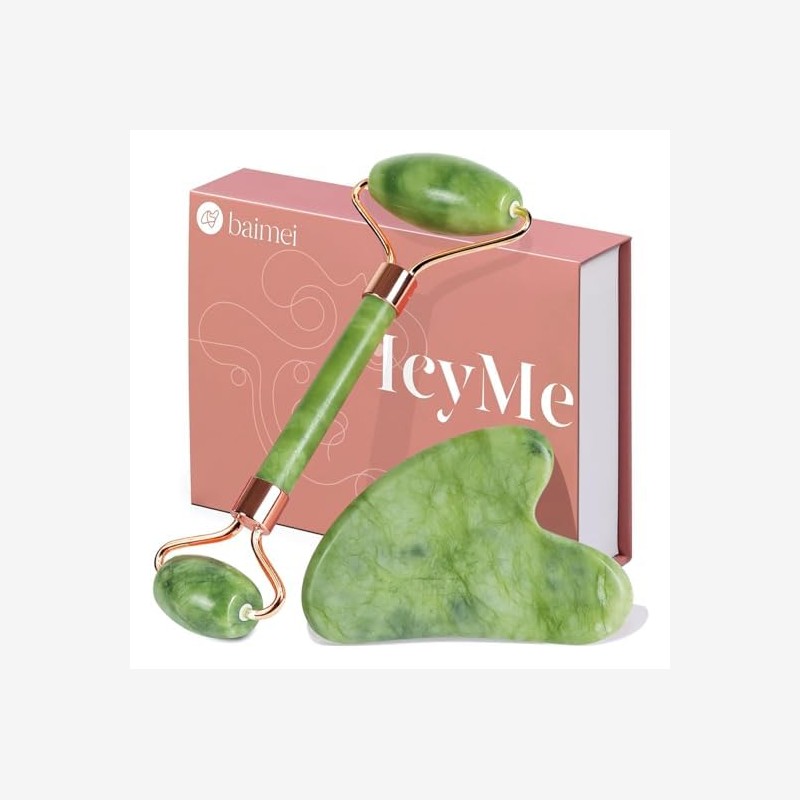
For a starting point, the BAIMEI IcyMe Gua Sha & Jade Roller Set (HPR 9.3, 38,199 reviews, $10 at the time of writing) is the one set that cleared our threshold this round. Honest note: only three gua sha-adjacent products made the cut this month — one set, one cooling roller, one patch — so this section is short on purpose. We'd rather list three than pad the list.
Why the old "use it daily, press harder" answer no longer applies
The older advice treated the stone as a treatment and frequency as the dial that controls it. More sessions, harder passes, dry skin, jawline results in a month. Every part of that is wrong in the same direction: it turns a five-minute cosmetic habit into a project with a deadline, and then blames you when the deadline passes.
The current framing is narrower and more useful. Pressure and slip are the variables that matter; the number of days is downstream of how your skin responds. The de-puffing effect is temperature-driven and short-lived. The rest is hydration and consistency. Nothing here is structural.
That shift also changes who should skip it. Anyone with active acne, eczema or rosacea should keep the pressure minimal or skip the tool entirely — an active flare isn't the moment to add friction, and no gua sha routine outruns a damaged barrier.
Bottom line
Two or three sessions a week with light pressure over proper slip is the answer for most people, and daily only if your skin stays visibly calm. The effect you'll actually see is de-puffing that lasts hours, plus a hydrated surface that builds over weeks — not contour change, and not a fix for a flare. Buy a stone with a smooth, unchipped edge, clean it after every use, and treat the oil as part of the method rather than an upsell.
Next step: pick your frequency for the next three weeks and photograph your face in the same light on day one and day twenty-one. If the only difference is that you feel better, that's still a real result — just not the one the packaging promised.
FAQ
Can I use a gua sha every day? Yes, if your skin stays calm — no lingering redness, no tenderness, no new visible capillaries. Start at two or three sessions a week and build up. If irritation appears, reduce pressure and stroke count first; cutting days while keeping hard strokes doesn't solve anything.
Does the stone material matter — jade versus stainless steel? For results, no. The cooling effect comes from temperature, not the material, so a chilled metal roller and a chilled jade stone behave the same way. What does matter is the finish: a chipped edge or a porous, gritty surface is a safety problem, and that's the part worth inspecting.
Is gua sha safe with active acne, eczema or rosacea? Keep the pressure minimal or skip it during a flare. Friction over compromised skin makes things worse rather than better, and no routine compensates for a barrier that's already struggling. Wait for calm skin, then reintroduce light strokes over slip.
Do under-eye patches replace a gua sha or roller? No — they do a different job. Patches are a delivery format for hydrating ingredients rather than a structural treatment, and their results are temporary. They're useful before photos. They won't de-puff through temperature the way a cooled stone or roller does.
How long does the de-puffing actually last? A short window — hours, not a full day. It's a temperature effect, which is why chilling the stone beforehand is the step that matters. Budget it as a before-you-go-out move rather than an all-day result.


