 Handpicked
Do Air Purifiers Help With Pet Dander?
Yes, if the CADR matches the room and you leave it running. A small unit on high is louder and less effective than the right size on medium.
7 min read
Handpicked Reviews
Written and dated by our editors.
 By Noor HaddadNoor Haddad · Air Quality EditorPublished in September 2026
Quick answerYes — dander is a particle, and a HEPA filter traps it; carbon handles the smell separately. Size by CADR: roughly two thirds of your room's floor area in square feet — a 300 sq ft room needs about 200 CFM. Skip ionisers and "activated oxygen" units.
On this page
- Do air purifiers help with pet dander?
- What size air purifier do I need for a room with a pet?
- Will it be too loud to sleep with?
- What do filters cost per year?
- Why the old answer no longer applies
- Bottom line
Do air purifiers help with pet dander?
Start with the room and the pollutant, then pick the machine — not the other way around.
A 150 sq ft bedroom with one cat and the door shut is a different job from a 600 sq ft open living area with two shedding dogs. And the pollutant itself is not one thing:
- Dander is a particle. It is the fine, sticky fraction — not the hair you can see on the sofa. Particles are what a HEPA filter is built to capture, and that is the part of the problem an air purifier actually solves.
- Odour is a gas. Pet smell is not a particle, so HEPA does nothing for it. Carbon is the layer that handles odour, and it runs on a completely different replacement clock than HEPA does. Two jobs, two consumables, one box.
So the honest answer is: yes for the airborne particulate, and only if the machine is sized for the room and the filter gets changed. A purifier is a holding area for what is already floating, not a cleaning service for the carpet, the bedding or the dog. Grooming and vacuuming remove dander at the source; the filter deals with the fraction that gets past you. Buy the purifier expecting it to do the second job only.
What size air purifier do I need for a room with a pet?
Use CADR, and use this rule: roughly two thirds of the room's floor area in square feet.
A 300 sq ft living room wants about 200 CFM. A 150 sq ft bedroom wants about 100 CFM. That is the whole calculation, and it takes ten seconds.
The catch is that plenty of listings never publish a CADR figure. If you cannot find it, you cannot run the math, and you are shopping on a coverage claim instead of a number you can check against your own floor plan.
Why you should not just buy small and turn it up
A small purifier on its top speed is not the same product as a bigger one on low. It is louder, it pushes the filter toward the end of its life faster, and you will still be short of air movement for a large room. If the room is bigger than the machine, you have bought a noisemaker with a filter in it. Size for the room you actually have — that single decision drives the other two numbers below.
Will it be too loud to sleep with?
The loudness figure you see quoted is normally taken at the top fan speed. Nobody sleeps at the top fan speed. The number that matters is the one you would leave running from 11pm to 7am without noticing it, and that is a lower setting.
That is the second reason to size up rather than down. Extra CADR headroom lets you sit on a lower, quieter speed and still move enough air for the room. Under-sized machines force you up the speed ladder at night, which is exactly where people give up and switch the thing off — and a purifier that is off removes nothing at all.
One more noise source people miss: a clogged filter. As the HEPA loads up, airflow drops and the machine gets louder while doing less, and the running cost climbs with it. If your purifier has started to sound strained, the answer is usually a filter, not a new machine.
What do filters cost per year?
Budget HEPA every 6–12 months and carbon every 3–6 months. In a pet household, assume the fast end of both ranges: yearly HEPA, carbon three to four times a year. That is the cadence, and it is the piece of the price tag that does not appear on the product page.
Multiply that cadence by the cost of the specific replacement filters for the model you are considering, and you have your annual number. Do this before checkout, not after. Purchase price is the entry ticket, not the cost of owning the thing.
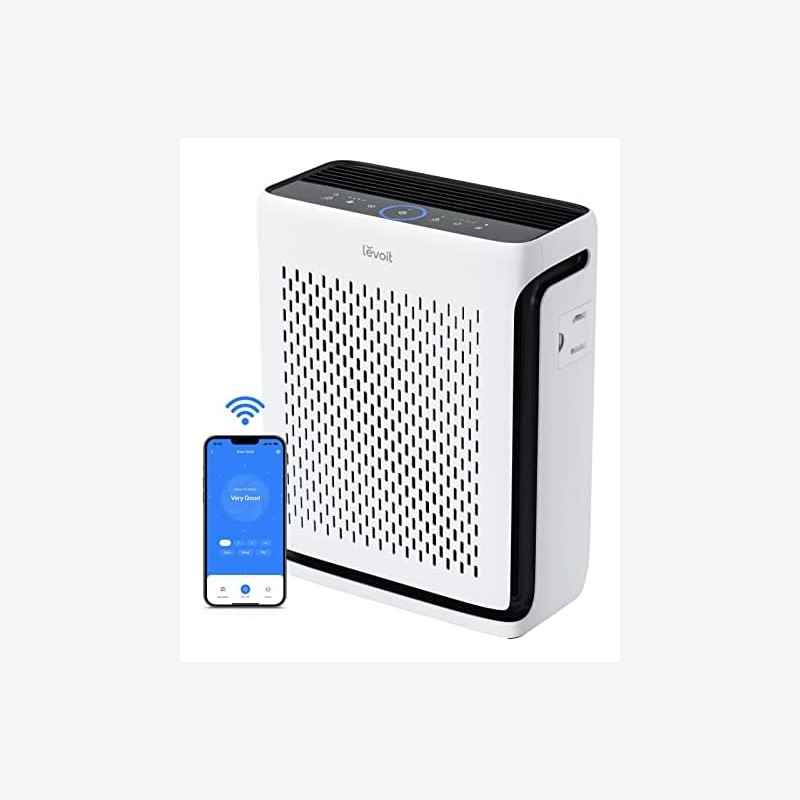
The LEVOIT Air Purifier for Home Pets is the filtration unit that cleared our bar this month — HPR 9.3, 11,364 reviews, $120 as of writing. That $120 is the machine. It is not the year.
And do not stretch the intervals to save money. A loaded filter costs you twice: it raises noise and it raises running cost, so the savings get paid back in electricity and irritation.
Why the old answer no longer applies
The older version of this advice was simpler and worse: any HEPA unit, place it near the pet, done. Three things have changed the answer.
Sizing moved to a number. "Get a HEPA purifier" is not actionable. Two thirds of floor area in square feet is — it tells you whether the box in front of you fits the room it is going into.
Carbon got its own clock. Treating the filter as one item with one replacement date is how pet owners end up with a machine that still traps particles and no longer touches smell. HEPA at 6–12 months and carbon at 3–6 months is two schedules, and the carbon one is faster.
Circulation got confused with filtration. Air movement is not cleaning. The DREO Smart Pedestal Fan (HPR 9.0, 4,148 reviews, $117 as of writing) moves air — that is its job, and moving dander around a room is not the same as taking it out of the air. A fan can help distribute air toward a purifier's intake, but it is not a substitute for one.
And the ozone category is out. Ionisers and anything marketed as "activated oxygen" are not the recommendation here. If a listing leans on either phrase, close the tab.
Our pool this month is small, and we would rather say so than pad it: one filtration unit and one fan cleared the bar. That is the list.
Bottom line
Dander is a particle, HEPA captures particles, and that is the mechanism — everything else is sizing and upkeep. Match CADR to the room by taking roughly two thirds of the floor area in square feet, then give yourself headroom so the speed you sleep on is still moving enough air. Budget HEPA at 6–12 months and carbon at 3–6, at the fast end for a pet household, and price those filters before you buy. Skip ionisers and "activated oxygen" entirely. Next step: measure the room the pet actually lives in, write down its square footage, and divide by three then double it — that number is your CADR target before you look at a single product page.
FAQ
Do air purifiers help with pet dander if I only have one small room? Yes, and a small room is the easiest case to solve because the CADR requirement is low. A 150 sq ft bedroom lands around 100 CFM by the two-thirds rule, which most mid-size units can deliver on a quiet setting rather than at full blast.
How often should I replace HEPA and carbon in a pet household? HEPA every 6–12 months and carbon every 3–6. With a shedding pet, plan for the shorter end of both: one HEPA a year and carbon roughly three to four times a year.
Is a fan as good as an air purifier for pet dander? No. A fan moves air; it does not filter it. The DREO Smart Pedestal Fan at $117 with 4,148 reviews has an HPR of 9.0 as a fan, but it should not be counted as a filtration purchase — moving dander around is not removing it.
Are ionisers safe to use around pets? We do not recommend them for this job. Ionisers and anything sold as "activated oxygen" are a category to skip — the particle problem is already solved by HEPA, and you do not need the extra mechanism to do it.
Which purifier made your shortlist for pet dander? One filtration unit this month: the LEVOIT Air Purifier for Home Pets, HPR 9.3, 11,364 reviews, $120 as of writing. We kept the list short rather than fill it out — only one filtration model met our bar for this use case.
---
The rule to shop by: take the room's floor area in square feet, use roughly two thirds of it as your CADR target, and buy the machine that hits it on a speed you can sleep through.


