 Handpicked
Does a Home Sauna Need 240 V?
Infrared panels often run on a normal outlet. A traditional heater almost never does. Here is how to tell before you buy.
7 min read
Handpicked Reviews
Written and dated by our editors.
 By Ingrid SolbergIngrid Solberg · Sauna & Home Spa EditorPublished in September 2026
Quick answerA 240 V circuit is about the heater, not the room. Traditional electric heaters draw several kilowatts and normally need a dedicated 240 V circuit. Infrared cabins usually run on a standard household circuit, though some larger models still want a dedicated line. Steam generators need their own circuit, plus water and a drain. On this page - Do you actually need 240 V for a home sauna? - How often will you use it? - Infrared vs steam: what does each one feel like? - What do the electrical and ventilation requirements involve? - Why the old answer no longer applies - Bottom line
On this page
- Do you actually need 240 V for a home sauna?
- How often will you use it?
- Infrared vs steam: what does each one feel like?
- What do the electrical and ventilation requirements involve?
- Why the old answer no longer applies
- Bottom line
Do you actually need 240 V for a home sauna?
Voltage belongs to the heater, not to the word "sauna."
Traditional electric heaters draw several kilowatts, and a load that size normally needs a dedicated 240 V circuit. Infrared cabins usually run on a standard household circuit because the panels draw far less, though some larger models still want a dedicated line. A steam generator is the third case: it needs a water supply, a drain and its own circuit.
So the useful answer is: read the nameplate. Circuit requirements are set by the heater's rating, not by the size of the cabin. A roomy infrared cabin can sit on a standard household circuit while a compact heater with stones cannot.
How often will you use it?
Answer this before you price an electrician. A 240 V install is money spent before your first session — dedicated circuit, permit, someone qualified to do the work — and none of it gets you into the heat any sooner. If the honest answer is "twice, then I'll forget it exists," wiring a fixed room is an expensive way to learn that.
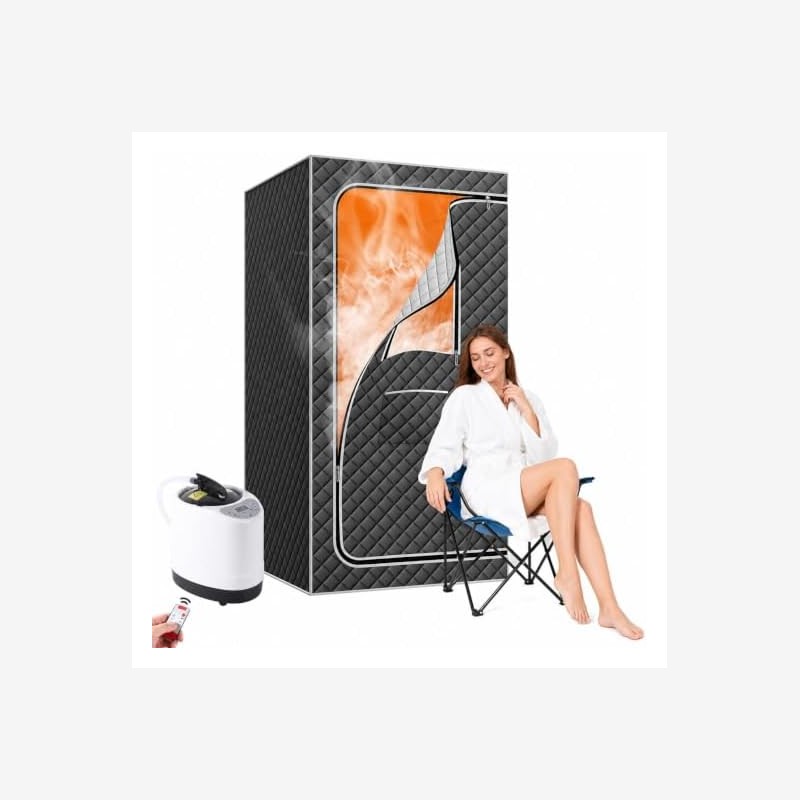
Three plug-in units currently clear our HPR bar:
- Garvee_SC Garvee Sauna Box, Portable Sauna for Home with 4L 150 — HPR 9, 57 reviews, $95 at the time of writing
- Garvee_SC Garvee Portable Infrared Steam Sauna Tent, 1,200 W 3L — HPR 8.8, 59 reviews, $93 at the time of writing
- GarveeHome Sauna Box, Portable Sauna for Home with 4L 1500W Ste — HPR 8.6, 4 reviews, $136 at the time of writing
The trade-off, stated plainly: 4 reviews is not a track record. The GarveeHome unit's HPR 8.6 rests on a thin sample, while the two with 57 and 59 reviews are the ones I'd trust to describe what actually shows up. And none of these three feels like a 240 V cabin with stones — a 1,200 W tent heats a person, not a room.
Only three models cleared the bar this month, so the list is short by design. I'd rather show you three than pad it to ten.
Then estimate the habit in two numbers you control: sessions per week × cost per session. Heaters draw several kilowatts; infrared panels draw far less. Your bill is wattage × hours × the rate printed on your own statement, so anyone quoting a per-session figure without your rate is guessing.
Infrared vs steam: what does each one feel like?
Three different sensations, and the thermostat reading is not one of them.
Traditional electric with stones: heats the air and the stones. Highest load of the three, several kilowatts, dedicated 240 V circuit. You feel heat because the air around you is hot.
Infrared: panels warm you and the surfaces in front of them directly. The air can still read cool while your skin feels warm, which is why a controller number tells you less than you'd expect. Lower draw, standard household circuit in most cases.
Steam: wet heat from a generator. A different feel entirely, and the most demanding install, because water has to come in and go out.
Heat-up is the part people underestimate. Air-based heaters have to heat the room first. Infrared starts working on you before the room is warm. A steam generator has to boil water before anything happens. Don't compare a temperature reading across types — compare how the heat reaches you.
What do the electrical and ventilation requirements involve?
Check in this order: nameplate, circuit, ventilation, outdoor extras.
- Circuit requirements are set by the heater's rating, not by the size of the cabin, so check the nameplate before assuming.
- Traditional electric: several kilowatts, dedicated 240 V circuit, normally.
- Infrared: standard household circuit usually, though some larger models still want a dedicated line.
- Steam: a water supply, a drain and its own circuit — three trades in one install.
- Outdoors: a weather-rated supply, and in many jurisdictions a disconnect within sight of the unit.
- Ventilation: every type produces heat, and steam produces moisture. Plan the air path before you plan where the benches go.
Why the old answer no longer applies
The "240 V or nothing" answer was written for one heater type: a traditional electric heater drawing several kilowatts. For that heater it is still correct. What changed is the category. Infrared cabins and plug-in boxes now sit under the same word, and they usually run on a standard household circuit because the panels draw far less — so a blanket voltage answer now misleads most buyers.
Two other updates matter. Circuit rules follow the heater's rating rather than the cabin's size, and an outdoor install adds a weather-rated supply plus, in many jurisdictions, a disconnect within sight of the unit. Prices move as well: every figure on this page is what the listing showed at the time of writing.
Bottom line
240 V is a heater question, not a sauna question. Find the nameplate and the answer usually becomes obvious. If you haven't proven the habit yet, a plug-in box at $93–$136 tests it for a fraction of what a dedicated circuit, permit and electrician cost — and the GarveeHome model's 4 reviews are the weak point in that short list. If the habit is already real and you want air-and-stones heat, budget the 240 V circuit and the ventilation as part of the build rather than as an afterthought. Estimate the ongoing side with sessions per week × cost per session, at your own kilowatt-hour rate.
Next step: photograph the nameplate, then get a wiring quote against that number.
FAQ
Can I plug a home sauna into a regular household outlet?
Sometimes. Infrared cabins usually run on a standard household circuit because the panels draw far less, and portable sauna boxes and tents are plug-in. A traditional electric heater drawing several kilowatts normally needs a dedicated 240 V circuit, so it can't share a standard outlet. Read the nameplate first.
Do infrared saunas ever need 240 V?
Usually not, but not never. The common case is a standard household circuit; some larger models still want a dedicated line. The deciding number is the heater's rating, not the size of the cabin.
Does a bigger sauna need more voltage?
No. Circuit requirements are set by the heater's rating, not by the size of the cabin. A large cabin with modest infrared panels can sit on a standard household circuit; a small heater with stones cannot.
What does a steam generator need that the others don't?
A water supply and a drain on top of its own circuit. That makes it the most involved of the three, and the one where a plumber and an electrician both enter the plan.
```json { "@context": "https://schema.org", "@type": "FAQPage", "mainEntity": [ { "@type": "Question", "name": "Can I plug a home sauna into a regular household outlet?", "acceptedAnswer": { "@type": "Answer", "text": "Sometimes. Infrared cabins usually run on a standard household circuit because the panels draw far less, and portable sauna boxes and tents are plug-in. A traditional electric heater drawing several kilowatts normally needs a dedicated 240 V circuit, so it cannot share a standard outlet. Read the nameplate first." } }, { "@type": "Question", "name": "Do infrared saunas ever need 240 V?", "acceptedAnswer": { "@type": "Answer", "text": "Usually not, but not never. The common case is a standard household circuit; some larger models still want a dedicated line. The deciding number is the heater's rating, not the size of the cabin." } }, { "@type": "Question", "name": "Does a bigger sauna need more voltage?", "acceptedAnswer": { "@type": "Answer", "text": "No. Circuit requirements are set by the heater's rating, not by the size of the cabin. A large cabin with modest infrared panels can sit on a standard household circuit; a small heater with stones cannot." } }, { "@type": "Question", "name": "What does a steam generator need that the others do not?", "acceptedAnswer": { "@type": "Answer", "text": "A water supply and a drain on top of its own circuit. That makes it the most involved of the three, and the one where a plumber and an electrician both enter the plan." } } ] } ```


